Your Complete Guide to Drum Carders
If you've been hand carding fiber and you're ready to move faster, a drum carder will change the way you work. This guide covers what a drum carder is, how to choose the right one, how to use it, and how to keep it running for years.
What Is a Drum Carder?
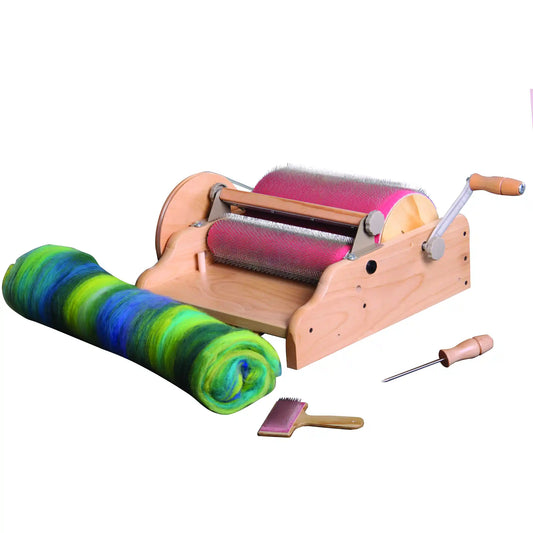
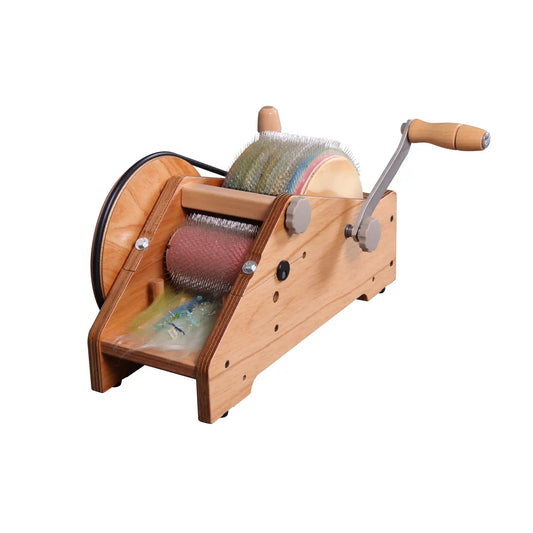
A drum carder is a fiber processing tool that uses two carding cloth-covered drums to align, blend, and prepare fiber into a smooth batt. You feed fiber onto a smaller "licker-in" drum by hand, and that drum transfers it onto a larger "swift" or main drum. The result is an even, airy batt of fiber that's ready for spinning, felting, or other projects.
Compared to hand carders, a drum carder processes fiber much faster and with more consistency. Where a pair of hand carders might take five minutes to produce a single rolag, a drum carder can produce a full batt in roughly the same time - and that batt will contain significantly more fiber.
Drum Carder vs. Hand Carders
Both tools card fiber, but they serve different purposes.
Hand carders are paddle-shaped tools covered in carding cloth. You load fiber onto one carder and brush it with the other. They're affordable, portable, and great for small amounts of fiber or quick color blending. Many spinners keep a pair of hand carders at their wheel even if they also own a drum carder.
Drum carders process more fiber in less time. They produce flat batts rather than rolags, and they excel at consistent wool blending across larger quantities. If you're processing a whole fleece, blending several fibers together, or making batts for felting, a drum carder is the more practical tool.
The short version: hand carders are for small batches and portability. Drum carders are for volume and consistency. Most serious fiber artists end up owning both.
How to Use a Drum Carder
Using a drum carder is straightforward, but a few drum carder techniques will help you get better results from the start.
Basic operation:
- Clamp or secure the drum carder to a sturdy table.
- Turn the handle (or press the foot pedal on motorized models) to spin the drums.
- Feed a thin layer of fiber onto the licker-in drum. Let the teeth grab the fiber - don't force it.
- Continue feeding fiber in thin, even layers until the main drum is full (don't overload it).
- Use the doffer stick or rod to lift the batt off the main drum by sliding it under the fiber at the seam in the carding cloth.
Tips for better batts:
- Thinner layers produce more even results. It's better to pass fiber through twice than to overload the drum in one pass.
- Pre-open your fiber before feeding it. Pull locks apart gently to remove any clumps.
- For wool blending, layer different fibers or colors on the drum, then doff the batt and run it through a second time for more thorough integration.
- Feed fiber at a steady pace. Rushing leads to uneven batts and can stress the carding cloth.
Choosing the Best Drum Carder for Beginners
If you're buying your first drum carder, here are the main factors to consider:
TPI (Teeth Per Inch) is the most important spec. It determines what types of fiber the carder handles best.
- 46 TPI (Fine) - A versatile, general-purpose cloth that works with a wide range of wool preparation tasks. Good for medium wools like Corriedale, Romney, and BFL.
- 72 TPI (Extra Fine) - Better for finer fibers like merino and blends that include silk or alpaca. If you primarily spin fine fiber, start here.
- 90-120 TPI - Specialty cloth for very fine fibers. Available on some models.
- 190 TPI - Cotton carding cloth. Purpose-built for cotton and other short-staple plant fibers.
Drum width determines how much fiber you can card at once. Wider drums make bigger batts, which matters if you're processing a lot of fiber or want longer continuous lengths for spinning.
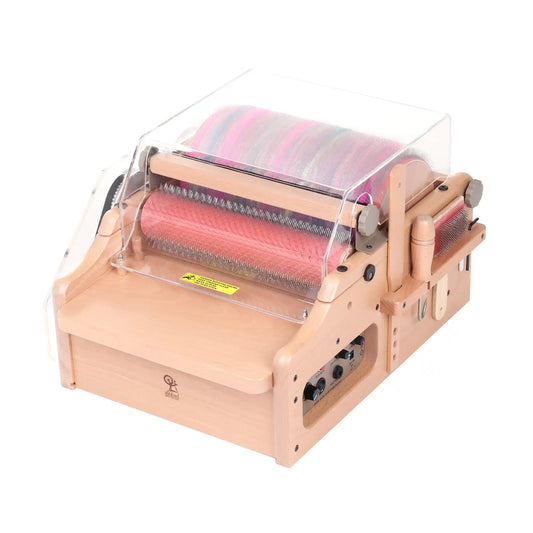
Manual vs. motorized. Most drum carders use a hand crank. Motorized or electric options (like the Ashford e-Drum Carder) free up both hands for feeding fiber, reduce fatigue on long carding sessions, and maintain a more consistent drum speed.
For most beginners, a mid-size drum carder with 72 TPI cloth is a great starting point. It covers the widest range of fiber types and gives you room to grow.
Drum Carder Brands We Carry
Ashford offers four drum carder models. The standard Ashford Drum Carder comes in both wool (72 TPI) and cotton (190 TPI) versions. The Ashford Wide Drum Carder has a wider drum for bigger batts. The Ashford Wild Drum Carder is a compact, affordable entry point. And the Ashford e-Drum Carder is their motorized option with variable speed control. Ashford carders are well-built, widely available, and backed by a strong parts supply.
Louet makes the Junior, Standard, and XL drum carders. Available in Fine (46 TPI) and Extra Fine (72 TPI) carding cloth options, Louet carders are known for smooth operation and solid construction. The Louet XL is one of the largest consumer drum carders on the market - ideal if you process full fleeces regularly.
Drum Carder for Alpaca Fiber
Alpaca is one of the fibers people ask about most when shopping for a drum carder. Alpaca fiber is fine, slippery, and has no crimp memory like wool, so it needs a bit more care.
Use a drum carder with 72 TPI or finer carding cloth. Coarser cloth won't grip the short, smooth fibers well enough. Feed alpaca slowly and in very thin layers. It's also helpful to blend alpaca with a small percentage of wool (10-20%) to add some structure and make spinning easier.
The same approach applies to other luxury and fine fibers like cashmere, yak, and silk blends.
Drum Carder for Felting
Drum carders aren't just for spinners. Felters use them to create even, consistent batts of fiber for both wet felting and needle felting projects. A drum carder lets you blend colors precisely, layer different fiber types, and produce batts of uniform thickness - all of which matter when you're building up felted fabric.
If you're using a drum carder for felting, a standard 72 TPI cloth works well for most wool types. Card your fiber into thin batts and layer them in alternating directions for stronger felt.
Drum Carder Maintenance
Taking care of your drum carder keeps it working smoothly and extends the life of the carding cloth.
- Clean the drums regularly. Use a flick carder or stiff brush to remove fiber buildup from the carding cloth after each session.
- Don't overload. Packing too much fiber onto the drum strains the teeth and can bend them permanently.
- Keep it covered. When not in use, cover your carder to keep dust, pet hair, and stray fibers off the cloth.
- Oil sparingly. A drop of oil on the drum shaft bearings once or twice a year keeps things spinning freely. Check your manufacturer's guide for specifics.
- Inspect the drive band. On hand-crank models, the drive band transfers power from the handle to the drums. Replace it if it starts slipping or shows wear.
Drum Carder Cloth Replacement
Carding cloth eventually wears out, especially with heavy use. The teeth dull or bend over time, and you'll notice that fiber doesn't transfer as cleanly or that your batts aren't as even.
Both Ashford and Louet sell replacement carding cloth for their drum carders. Replacing the cloth is a straightforward job that you can do at home with basic tools. It's the single most impactful maintenance task for keeping an older drum carder performing like new.
If you notice your carder isn't grabbing fiber the way it used to, worn cloth is the most likely cause. Check our Carding Cloth collection for replacements.
Drum Carder Troubleshooting
Fiber wrapping around the licker-in instead of transferring: You're feeding too much fiber at once. Thin out your layers and slow down.
Uneven batts: Usually caused by feeding fiber unevenly across the width of the drum, or by loading too much on one side. Spread your fiber across the full width of the licker-in as you feed.
Batt sticking to the drum: Make sure you're not overloading. Use the doffer tool at the correct angle, sliding it under the batt at the seam strip.
Handle feels stiff or hard to turn: Check for fiber wrapped around the drum shaft or tangled in the bearings. Also check the drive band tension - too tight will make cranking harder.
Teeth bending or flattening: This usually comes from aggressive cleaning or from carding fiber with debris (VM, seeds, burrs). Always pick through your fiber before carding and use a gentle touch when cleaning the cloth.
A Brief History of Drum Carders
The drum carder history stretches back to the Industrial Revolution, when carding was one of the first textile processes to be mechanized. Before carding machines, all fiber was carded by hand - a slow, labor-intensive process. Early drum carding machines were massive, powered by water wheels, and operated in mills.
The tabletop drum carders we use today are a scaled-down version of those industrial machines, adapted for home fiber artists starting in the mid-20th century. Companies like Pat Green, Louet, and Ashford helped popularize affordable home drum carders in the 1970s and 1980s, and the tools have continued to improve since then.
DIY Drum Carder: Should You Build One?
Some fiber artists build their own drum carders from scratch. It's possible - the core mechanics are relatively simple (two drums, a drive system, carding cloth) - but the precision required for good results makes it a challenging project.
The drums need to be perfectly round and parallel, the spacing between the licker-in and the main drum needs to be precise, and the carding cloth needs to be wrapped tightly and evenly. For most people, buying a manufactured drum carder and spending the saved time actually carding fiber is the better investment.
If you do want to try building a weaving or carding tool, start with something simpler like a blending board or a pair of hand carders before tackling a full drum carder build.
Ready to Buy a Drum Carder Online?
Browse our full selection above. If you're not sure which TPI or drum size is right for you, our team can help. We're fiber people - call us at (509) 536-7746 or email help@paradisefibers.com.