

Paradise Fibers Blending Board - Small
Paradise Fibers Blending Board - Small
SKU: SKU: 3467-0101
🧶 We'll wind your yarn into neat cakes for easy knitting/crocheting!
- Special OrderWe order it in for you when you order.
- Special OrderWe order it in for you when you order.
- Special OrderWe order it in for you when you order.
- Special OrderWe order it in for you when you order.

Order in --:--:-- for same-day shipping
Ships today from our Spokane, WA warehouse if you order by 1:00 PM PT
Couldn't load pickup availability
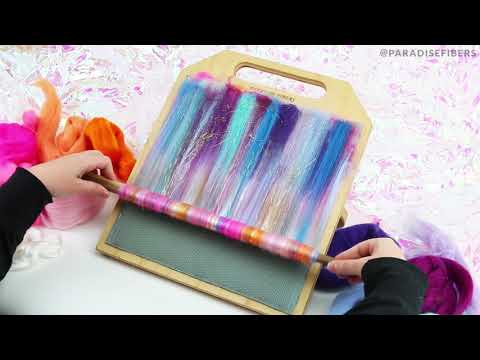
The Paradise Fibers 10.5" Blending Board is the ultimate fiber preparation tool with an 11.5" x 8.5" working area available in 54, 72, 90, 120, and 190 TPI for all your fiber needs. These high-grade laminate wood boards are great for absolute control of your blending, ultra-consistent fiber preparation, and creating the most awesome rolags with repeatability that’s unmatched. This smaller version is slightly narrower than the Large Blending Board to accommodate your workspace.
Paradise Fibers tools are painstakingly created with high levels of craftsmanship and artistry. You are sure to be pleased with the outstanding woodwork and details put into these beautifully built fiber processing tools.
Blending Board features:
- 3 position keel
- Very sticky rubber feet on both the board itself and on the bottom of the keel (so it can’t move around on a table!)
- Offered in the following sizes: 54, 72, 90, 120, and 190 tpi
- Overall measurements are: 15 ¼ by 10.5 inches with a full 11 1/2" by 8 1/2" working area
- Consisting of laminated wood, this thing is tough! Wood will be either laminated Alder Wood or Grade a-b Veneered Plywood.
- Easily creates ½ ounce batts, top, or rolags, which all depends on your choice of fiber.
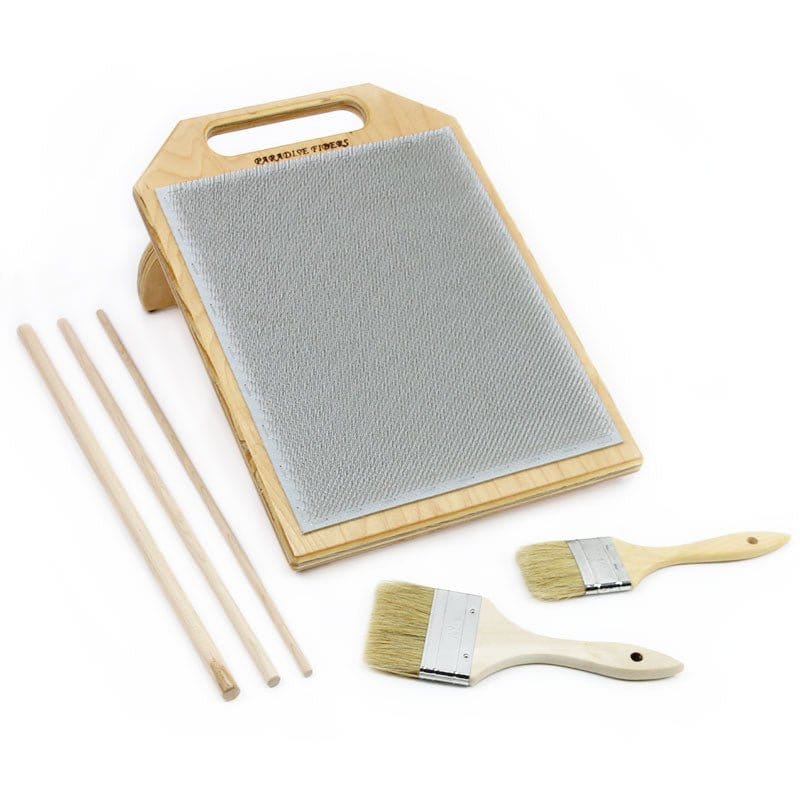
- Included with board:
- ¼”, 3/8” and ½” Maple dowel for removing your or rolags
- 1” and 3” standard chip brush to help draft or apply fiber.
We also make a Mini Carder or Blending Brush that works perfectly with these boards: Blending Brush
Check out our blog for videos and tutorials on how to use our Blending Boards to create the rolag of your dreams!
How to choose the correct Teeth Per Inch (TPI):
The carding cloth’s teeth per inch (tpi) measures how densely the teeth are packed together. That density determines how much texture of roving is removed and how much color is blended in a single pass. The higher the number, the finer the carding cloth and the more smooth and blended the fiber becomes.
Think of tpi as it applies to a hairbrush: If you have fine hair, you use a brush with lots of bristles close together. This gives a smooth finish. When you have curly hair, you use a wide-tooth comb or a brush with stiff bristles that are far apart. These bristles leave the curls together rather than separating and smoothing them out.
Although coarse and textured fibers are best carded on low-tpi carders, fine fibers can also be carded on equipment with less dense carding cloth. One way to match up your cloth with your fibre is by paying attention to the micron counts (approximate) of your fleece. Let’s consider anything between 18-24 micron is ‘fine’, that 24-32 Micron fibers are ‘medium’ and 33+ micron fibers are ‘coarse:
- Fine - tpi of 120< OR 90< for a blending board: (Merino, Alpaca, or Cormo) To card smooth, lofty batts and rolags with little to no texture or blend fibers and colors together thoroughly. Fine fibers are best used on high-tpi carding equipment. To card more textured or coarser fiber on a tool with a high tpi measurement, it is important to pick open the fiber first.
- Medium - tpi around 72: (BFL, Cheviot, Shetland) For most uses, including carding most wool. It can accommodate a range of fiber diameters, create somewhat textured fiber preparations, and blend and smooth moderately fine batts.
- Coarse - tpi 50>: (Lincoln, English Leicester, Herdwick) To keep lots of texture in the fibers and blend loosely, this will give you a chunky, textured batt. If you are carding multiple kinds of fiber together, you will get bold variations on a single pass.
Follow the link for more information on tpi and blending: https://spinoffmagazine.com/carding-cloth-tpi-best-job/


Why Paradise Fibers?
Your trusted partner in creativity since 1997. Family-owned, expert-driven, and dedicated to fueling your passion.
Real "Fiberers" on Staff
Family-owned and staffed by passionate experts offering real advice to support your creative journey.
A World of Fiber
Over 20,000 in-stock yarns, fibers, and tools, shipped quickly to keep your inspiration flowing.
Trusted by the Flock
Serving over 250,000 happy customers with a 4.9-star rating based on 10,000+ verified reviews.
Frequently Asked Questions
Most in-stock orders ship within one business day from our Spokane, WA shop, and you'll get tracking as soon as yours is on the way. If an item is a special order or backordered, it says so right above the Add to Cart button.
Many of our products are beginner-friendly, and we make this clear in the product description.
You can also explore our kits and bundles, they include everything you need to get started with confidence.
Each fiber has its own feel and function. Merino is super soft and great for next-to-skin wear. BFL (Bluefaced Leicester) is strong, with a lovely luster. Need help deciding? Reach out! We’re happy to help.
For Yarn, check your pattern's yardage requirements. A standard pair of socks usually takes 100g of fingering weight, while a hat takes about 100g of worsted.For Spinning Fiber, a standard 4oz braid will generally make a pair of socks or a hat. For larger garments like sweaters, you will likely need 1.5 to 2 lbs of fiber.Still unsure? Send us your project details! We are happy to do the math for you to ensure you don't run short.
If a product goes out of stock after you order, we’ll notify you right away with options: a refund, a substitution, or a backorder (when possible). We never leave you hanging.
Returns are accepted within 30 days of delivery on unused items in their original packaging. Start a return in our returns portal with your email or order number and it issues the label. Used and demo equipment, bargain bin and clearance items, gift cards, digital patterns and custom items are final sale. If an item arrives damaged, defective or incorrect, report it in the portal with a photo and we cover the return shipping. Full terms: return policy.
Yes! Our project kits and beginner bundles include hand-picked materials, tools, and instructions — so you can dive in without the guesswork.