
Wool Combs and Hackles
Paradise Fibers Wool Combs and Wool Hackles feature stainless steel tines, a big upgrade over typical carbon-steel combs. Stainless tines resist rust in humid studios and after damp-fleece prep, and they’re lower-maintenance over time while still delivering clean, consistent fiber alignment for worsted prep.
-

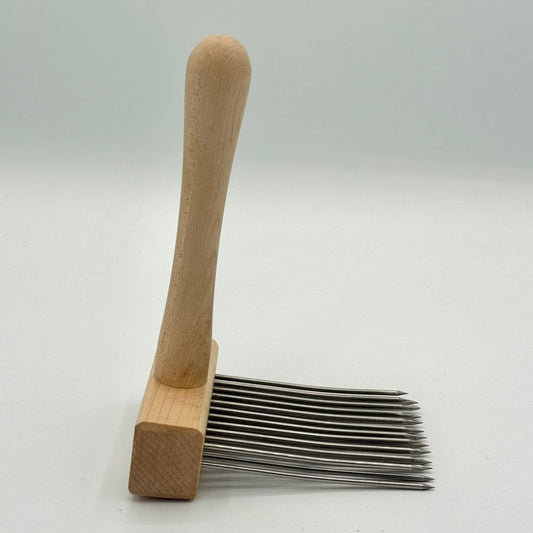
Maple Double Row Wool Combs with Stainless Steel Tines
Regular price From $80.00 USDRegular price -
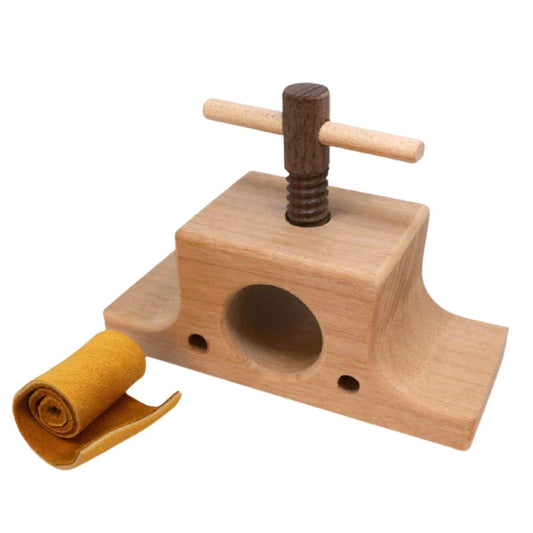
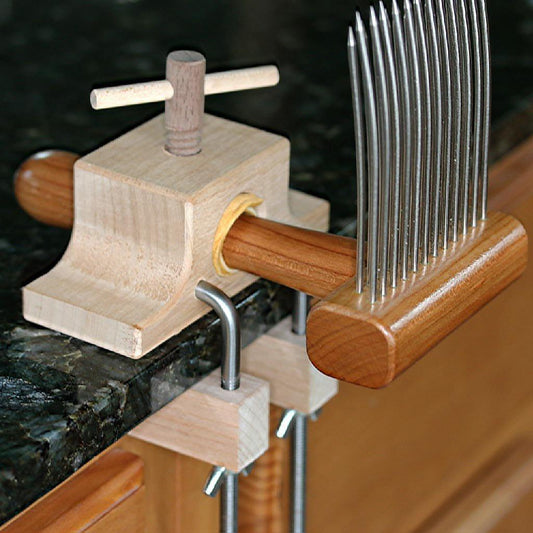
Paradise Fibers Wool Comb Holder
Regular price From $45.00 USDRegular price -

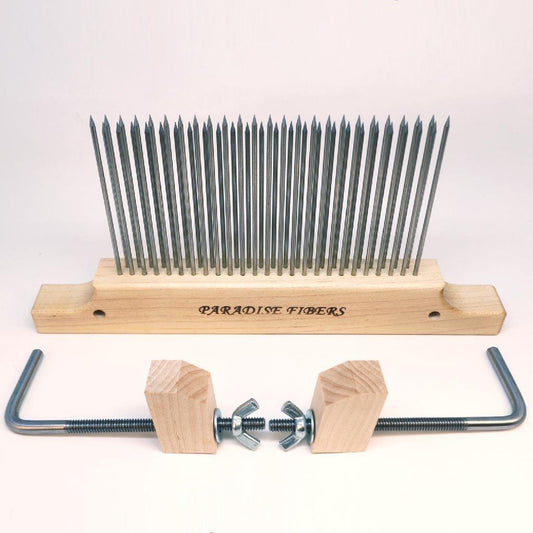
Double Row Combing Hackles
Regular price From $120.00 USDRegular price -

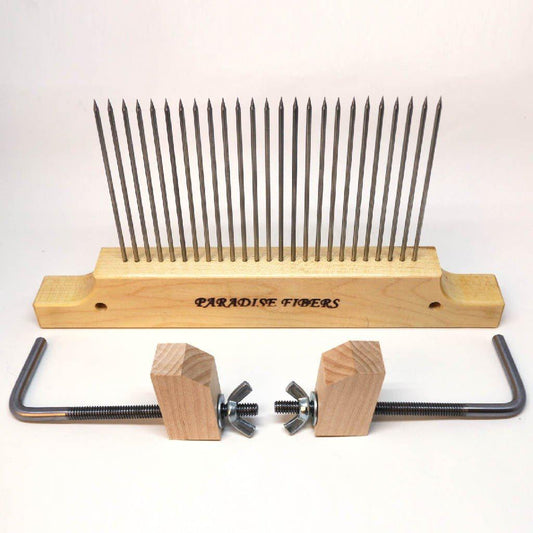
Single Row Blending Hackles
Regular price From $65.00 USDRegular price$95.00 USDSale price From $65.00 USD31% Sale -

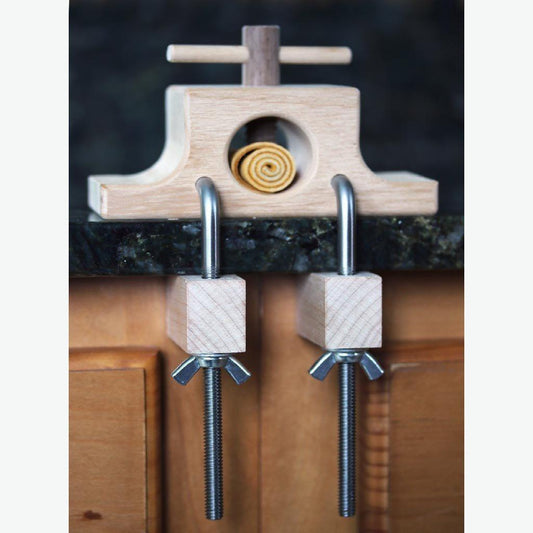
Paradise Fibers Hold It Hooks
Regular price $30.00 USDRegular price -

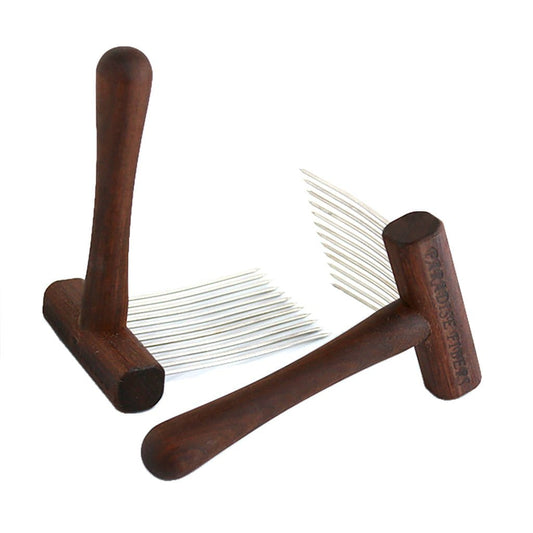
Paradise Fibers Single Row Wool Combs
Regular price From $55.00 USDRegular price -

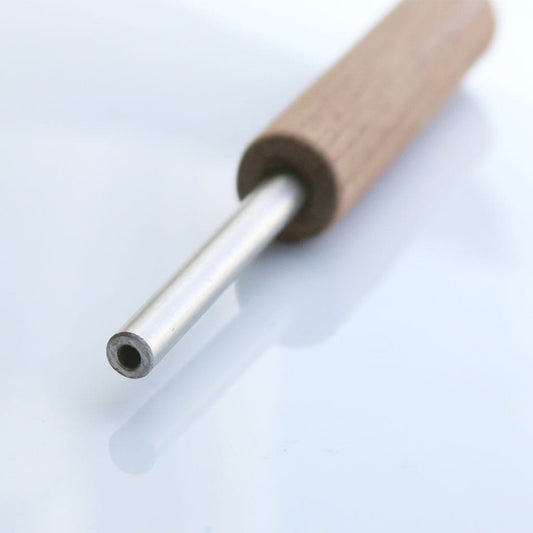
Wool Combs Tine Straightener
Regular price $14.95 USDRegular price -

Louet Double Row Mini Hand Combs
Regular price $190.00 USDRegular price -

-

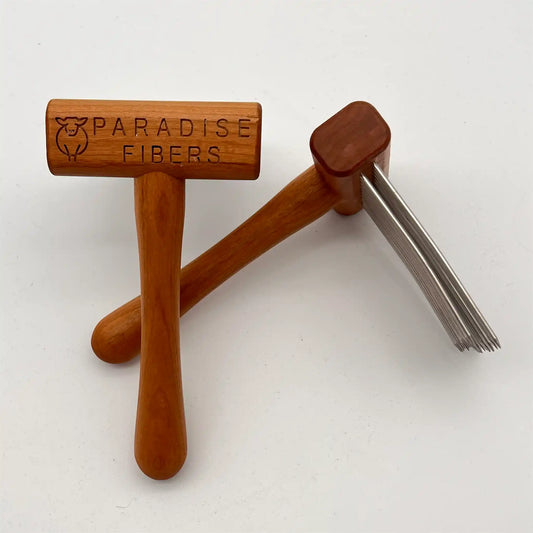
Cherry Double Row Wool Combs with Stainless Steel Tines
Regular price From $80.00 USDRegular price -


Maple-Walnut Double Row Wool Combs with Stainless Steel Tines
Regular price From $80.00 USDRegular price -

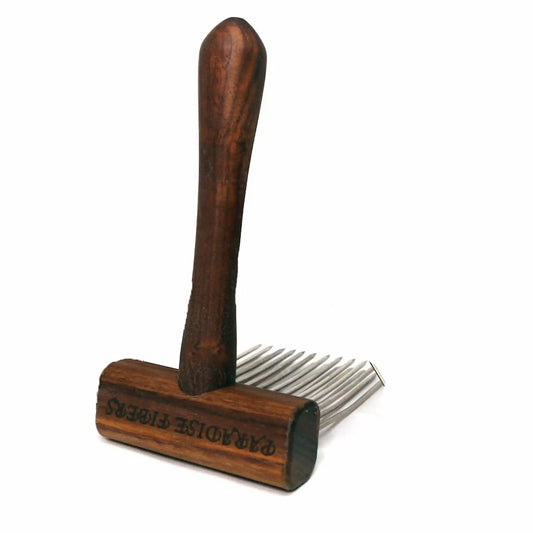
Walnut Double Row Wool Combs with Stainless Steel Tines
Regular price From $80.00 USDRegular price -

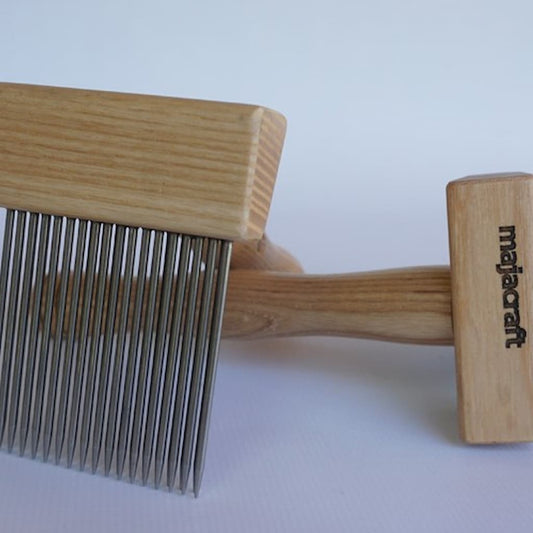
Majacraft Mini Comb System Two-Row Extra Fine
Regular price $249.99 USDRegular price


Frequently Asked Questions
Wool combs and hand carders are both fiber preparation tools, but they produce very different results from very different processes. Hand carders use short, densely packed teeth to open and align fiber into a fluffy rolag suitable for woolen spinning. Wool combs use long, widely spaced tines arranged in rows to comb through fiber, removing short fibers and vegetable matter and producing a highly aligned preparation called a top that is ideal for worsted spinning. Combed top drafts into a smooth, dense, lustrous yarn with excellent stitch definition - very different from the airy, lofty yarn produced from a carded rolag. The choice between them depends entirely on the yarn you want to spin.
A hackle is a stationary combing tool - typically a long flat bar with rows of long metal tines - used to blend and align fibers that are then pulled off as a continuous length of top. While wool combs are worked in pairs and used to transfer fiber back and forth between them, a hackle stays fixed and you load fiber onto it by pulling it through the tines. Hackles are particularly useful for blending different fiber types together into a uniform top, for processing longer staple fibers, and for creating smooth combed preparations in larger quantities than hand combs allow. Many serious spinners own both and use them for different stages of their fiber preparation workflow.
Wool combs and hackles have long, sharp metal tines that can cause injury if handled carelessly. This is not a reason to avoid them - they are standard tools used safely by spinners around the world - but it does mean you should learn to use them properly before working with them unsupervised. Always work with a combing stand or secured hackle so the tool does not shift unexpectedly, keep your non-working hand well away from the active tines, and store combs and hackles with the tines covered or facing safely away from hands and bodies. Our team is happy to walk you through safe technique if you are new to these tools.
Wool combs work on most long staple natural fibers, not just wool. Mohair, alpaca, camel, llama, and plant fibers like flax and hemp can all be processed on wool combs, provided the staple length of the fiber is appropriate for the tine spacing of your combs. Finer tined combs work better for shorter, finer fibers, while more widely spaced tines are better suited to longer staple, coarser fibers. Very short staple fibers - like some fine downs and certain cottons - are better suited to carding than combing. If you are not sure whether your fiber is a good candidate for combing, we are happy to help you think through the best preparation approach.
For most home spinners, a good set of wool combs handles the majority of fiber preparation needs very capably on their own. Hackles are a wonderful addition for spinners who blend multiple fiber types frequently, process larger quantities of fiber at once, or want a more streamlined workflow for producing long continuous top. If you are just getting started with combed fiber prep, a quality set of wool combs is the right first purchase. A hackle is a worthwhile investment once you know you enjoy the worsted prep process and want to expand your toolkit. We make our own wool combs here in the shop, so we can tell you firsthand exactly how they perform.
The key variable is tine spacing relative to fiber staple length and micron count. Finer, shorter fibers like fine merino and cashmere work best with combs that have more tines set more closely together - this gives you better control and cleaner alignment of delicate fiber without too much waste. Coarser, longer staple fibers like Romney, Lincoln, or raw mohair work well on combs with more widely spaced, stouter tines that can move through dense fiber without bending. When in doubt, describe the fiber you most want to process to our team and we will point you toward the right comb size for your spinning goals.