

Kromski Presto Rigid Heddle Loom - 10" & 16"
Kromski Presto Rigid Heddle Loom - 10" & 16"
SKU: SKU: KPRESTO10
🧶 We'll wind your yarn into neat cakes for easy knitting/crocheting!
- Sold Out
- Sold Out

Ships in 1-2 business days
Couldn't load pickup availability
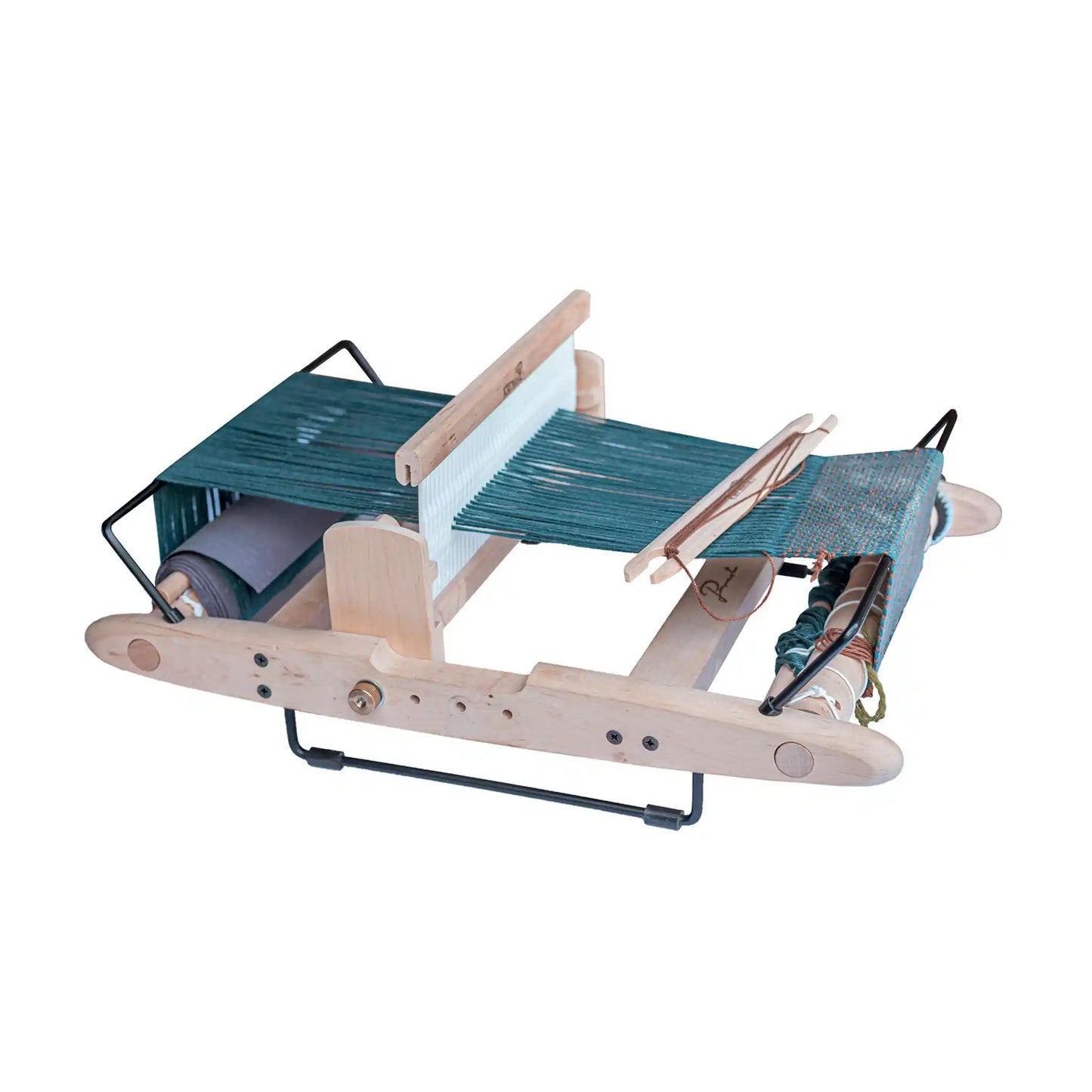
The Kromski Presto is a rigid heddle loom for people who do not have room for a loom. It sits on a table you already own, and when you are done the beams and braces pull out, the heddle blocks rotate, and it lies flat enough for a shelf. Kromski build it in Poland from European alder, unfinished unless you choose Harbor Blue.
Is this your loom?
Buy it if storage is the real constraint. Most small looms fold into a wedge. This one comes apart and goes properly flat, into a drawer, a closet gap or a suitcase.
Look at the Harp Forte instead if you want to leave a half-woven project on the loom, or warp long. Kromski state it folds with the project in place and make no such claim for the Presto, and its built-in warping board means your warp length is not set by where you can clamp a peg.
Look elsewhere if you want to weave fine. A single Presto reed stops at 12 dent, which puts lace weight, light fingering and the fine weaving cottons outside what this loom will sett.
10 inch or 16 inch?
Loom width is width in the reed. What comes off is narrower, because the selvedges draw in and the cloth shrinks when you wash it. Plan on losing around 15%, nearer 10% in cotton and up to 20% in an elastic yarn.
- 10 in (25 cm) finishes near 9 in. A scarf, a cowl, mug rugs, a bag strap, and the quickest way to sample a handspun at sett. Not a towel or a placemat.
- 16 in (40 cm) finishes near 14 in. All of the above, plus a kitchen towel, a table runner, placemats, and a baby blanket woven as two panels and joined.
Take the 16 unless you weave on your lap or are buying for a child. If you can get to Spokane, sit at both. Reach across the reed decides it and a photograph will not.
Specs, and what each is for
- One 8 dent reed included. Dent count is warp ends per inch, so it sets your sett and caps yarn thickness. Kromski's rule is that the warp moves through the slots and holes without constriction on every beat, so a yarn too fat for the slot abrades itself on each pass. A fat yarn in a fine reed does not work at all.
- The dent ladder, and it is width specific. We stock all four in both widths: 5 dent for bulky and thick handspun, 8 dent for worsted, 10 dent for DK and sport, 12 dent for fingering and sock. A 10 in loom takes 10 in reeds only, so check the width before the dent.
- Two heddle blocks, each cut for two reeds. The manual carries Kromski's notice that the block now takes two reeds, so a current Presto holds a second one, opening pick-up and double-faced work. The Weaver's Choice reed mixes yarn weights across one warp.
In the box, and warping it
The loom, the 8 dent reed, two stick shuttles, a pick-up stick, a warping peg and two clamps, warp helper loops, a two-ended threading hook, and a skein of yarn with scarf instructions. The shuttles, stick, peg and clamps are what most looms make you buy separately.
You warp directly off the peg. Kromski's booklet sets it 80 in (200 cm) from the back dowel rod, so clear that plus the depth of the loom, on a table you can clamp at both ends. The apron strings go over the outside of the metal beam. This is what owners get wrong. First, take the rubber bands off the dowel rod and try to lift it over the black bar. If it will not come cleanly, your strings run under the beam and the shed will fight you all project.
Unfinished alder, or Harbor Blue
The unfinished loom arrives as raw alder to seal yourself. Finish the parts while they are flat and apart, and leave the reed alone. Alder carries darker reddish-brown flecks, so your loom will not match the photograph exactly, and that is the wood rather than a fault. Harbor Blue arrives finished. A fitted bag and a floor stand are made for it in each width.
- Someone here has warped one. Call and we will walk you through the first warp, or tell you which reed to buy
- Service and repair in-house at our Spokane shop, and you can come sit at both widths

Why Paradise Fibers?
Your trusted partner in creativity since 1997. Family-owned, expert-driven, and dedicated to fueling your passion.
Real "Fiberers" on Staff
Family-owned and staffed by passionate experts offering real advice to support your creative journey.
A World of Fiber
Over 20,000 in-stock yarns, fibers, and tools, shipped quickly to keep your inspiration flowing.
Trusted by the Flock
Serving over 250,000 happy customers with a 4.9-star rating based on 10,000+ verified reviews.
Frequently Asked Questions
Most in-stock orders ship within one business day from our Spokane, WA shop, and you'll get tracking as soon as yours is on the way. If an item is a special order or backordered, it says so right above the Add to Cart button.
Many of our products are beginner-friendly, and we make this clear in the product description.
You can also explore our kits and bundles, they include everything you need to get started with confidence.
Each fiber has its own feel and function. Merino is super soft and great for next-to-skin wear. BFL (Bluefaced Leicester) is strong, with a lovely luster. Need help deciding? Reach out! We’re happy to help.
For Yarn, check your pattern's yardage requirements. A standard pair of socks usually takes 100g of fingering weight, while a hat takes about 100g of worsted.For Spinning Fiber, a standard 4oz braid will generally make a pair of socks or a hat. For larger garments like sweaters, you will likely need 1.5 to 2 lbs of fiber.Still unsure? Send us your project details! We are happy to do the math for you to ensure you don't run short.
If a product goes out of stock after you order, we’ll notify you right away with options: a refund, a substitution, or a backorder (when possible). We never leave you hanging.
Returns are accepted within 30 days of delivery on unused items in their original packaging. Start a return in our returns portal with your email or order number and it issues the label. Used and demo equipment, bargain bin and clearance items, gift cards, digital patterns and custom items are final sale. If an item arrives damaged, defective or incorrect, report it in the portal with a photo and we cover the return shipping. Full terms: return policy.
Yes! Our project kits and beginner bundles include hand-picked materials, tools, and instructions — so you can dive in without the guesswork.