
Wool Roving & Spinning Fiber
We have wool roving from sheep and farms all over the world. Quantity discounts available on bulk wool roving for spinning at 4oz, 8oz, 16oz quantities.
-

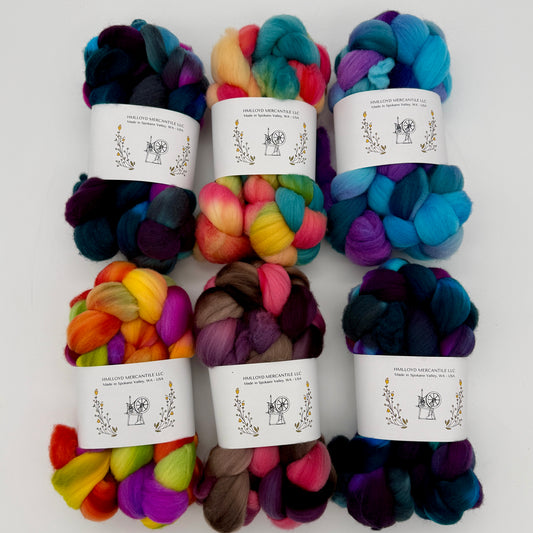
HMLLOYD MERCANTILE LLC Spokane Themed Hand Dyed Roving Fiber Braids
Regular price $30.00 USDRegular price

Frequently Asked Questions
Beginners usually do best with a forgiving, mid-range fiber like Corriedale, or a combed wool top, because the parallel fibers of top draft smoothly and predictably while you're still developing consistent hands. Merino is wonderfully soft but its fine, short fibers can be a little slippery to control at first, so many teachers suggest starting with something slightly coarser. If you tell us how you're learning and what you'd like to make, we can recommend a beginner-friendly fiber and preparation to get you started happily.
In many cases yes, since breeds like Merino and Corriedale spin beautifully and also felt readily, making them versatile choices if you enjoy both crafts. The important thing to check is that the fiber is not superwash treated, because superwash preparations are specifically designed not to felt, which makes them great for spinning washable yarn but unsuitable for felting. If felting is your goal, choose an untreated wool roving, and our team can point you to fibers that work for both.
It depends on what you're making and how you spin or felt, but as a rough guide, a small needle-felted figure needs only an ounce or two, while a spun sweater's worth of yarn can take a pound or more of fiber. Because loft and finished yarn weight vary with your technique, it's smart to buy a little extra from the same batch to be safe, and our 1 oz sample option lets you test a fiber first. Tell us your project and we'll help you estimate the right quantity so you don't run short.
Micron count measures the diameter of the wool fibers, and lower numbers mean finer, softer fiber, which is why fine Merino at 19 to 23 micron feels soft enough for next-to-skin wear while coarser wools feel more rustic and hardwearing. It matters because it directly affects both softness and how the finished yarn or felt behaves, with finer fibers suiting delicate garments and coarser ones excelling at durable, textured projects. If you're sensitive to prickle or planning next-to-skin knits, choosing a lower micron fiber makes a real difference.
Wool roving is best stored somewhere cool, dry, and dark, ideally in a breathable container or bag rather than sealed plastic long term, so the fiber can breathe and avoid trapping moisture. The biggest threat is moths, so keeping fiber protected and periodically checking your stash, perhaps with cedar or lavender nearby, helps guard against damage. Stored well, wool roving keeps beautifully for a long time, ready for whenever inspiration strikes.