



Ashford Kiwi 3 Spinning Wheel
Ashford Kiwi 3 Spinning Wheel
SKU: SKU: KSW3
🧶 We'll wind your yarn into neat cakes for easy knitting/crocheting!

Ships in 1-2 business days
Couldn't load pickup availability
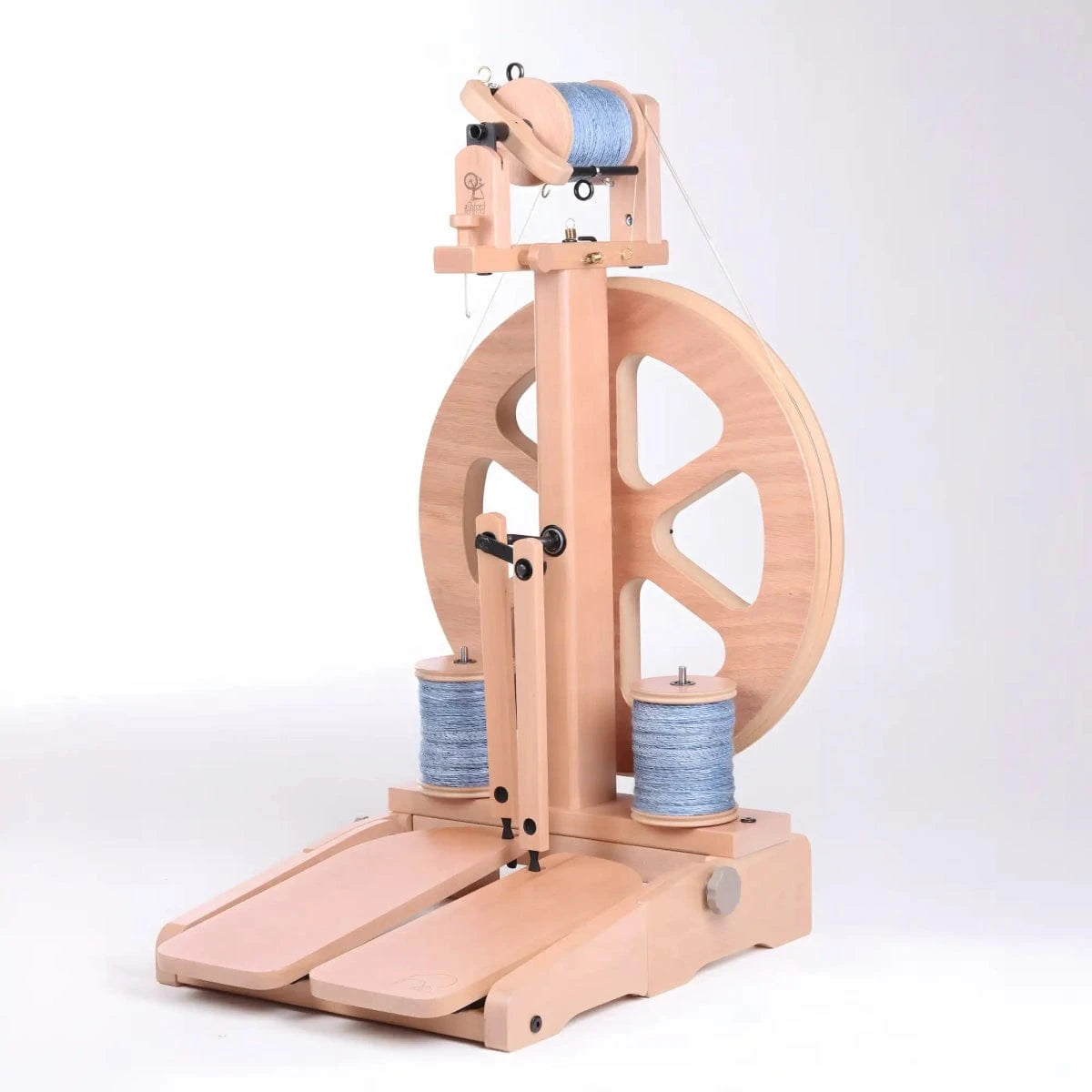
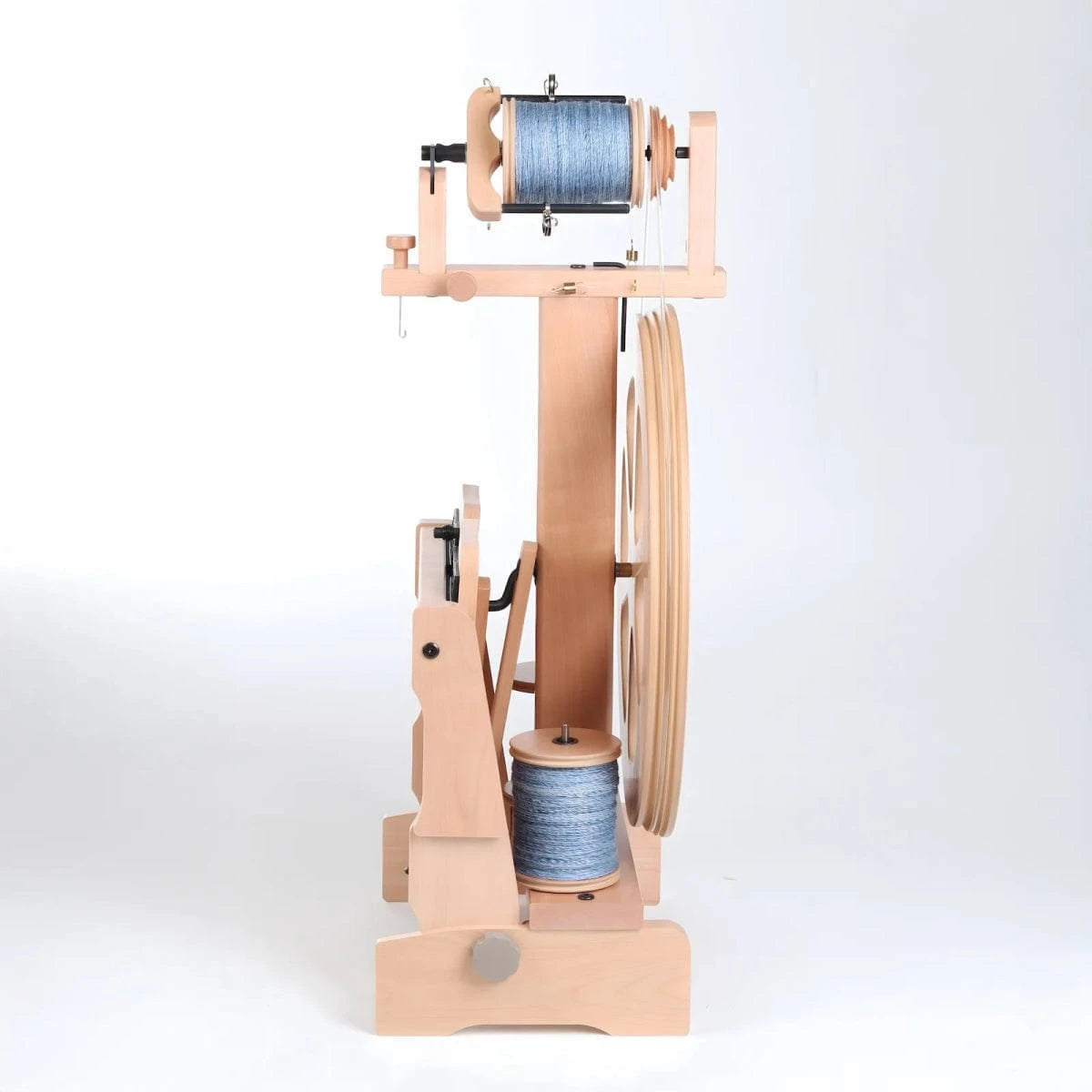
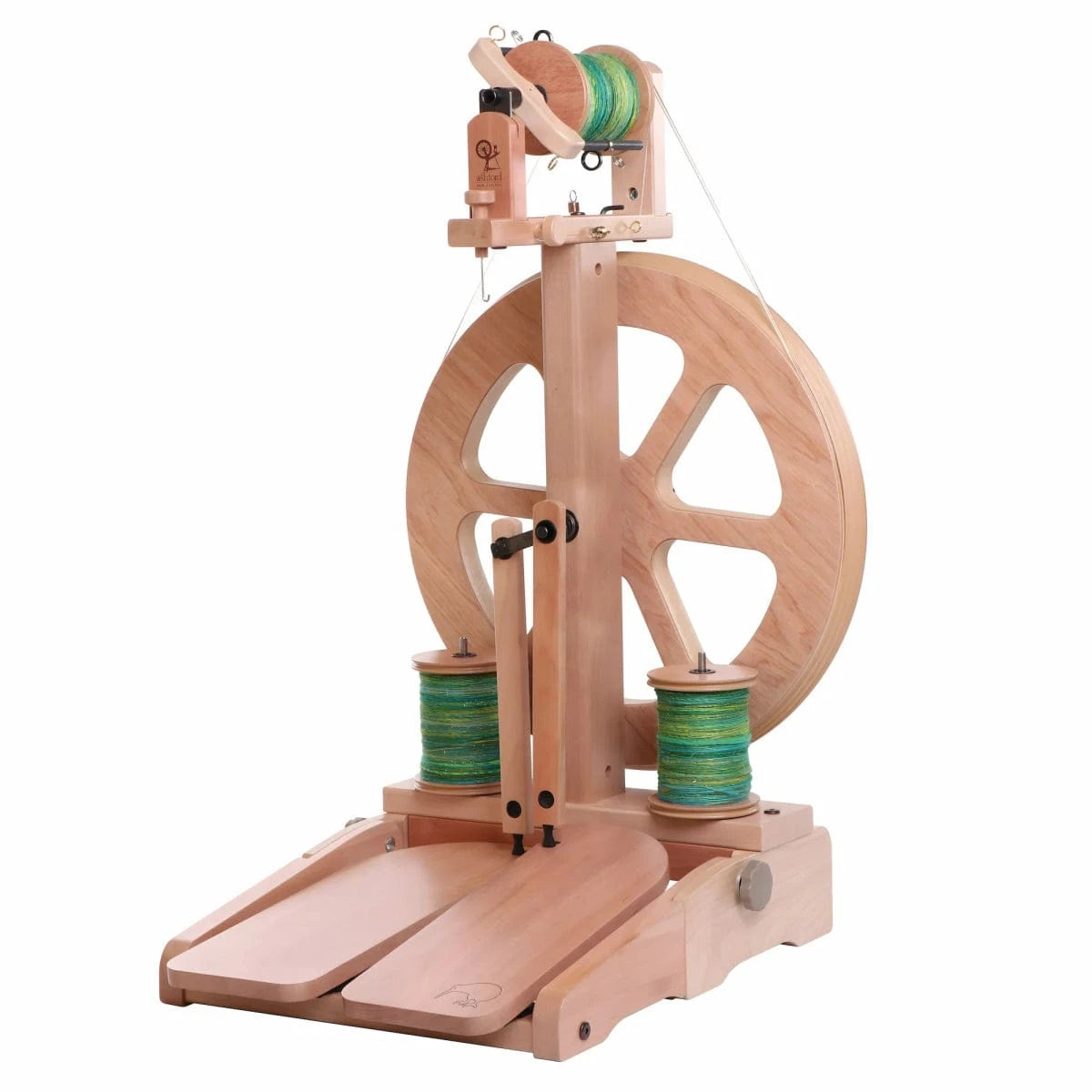
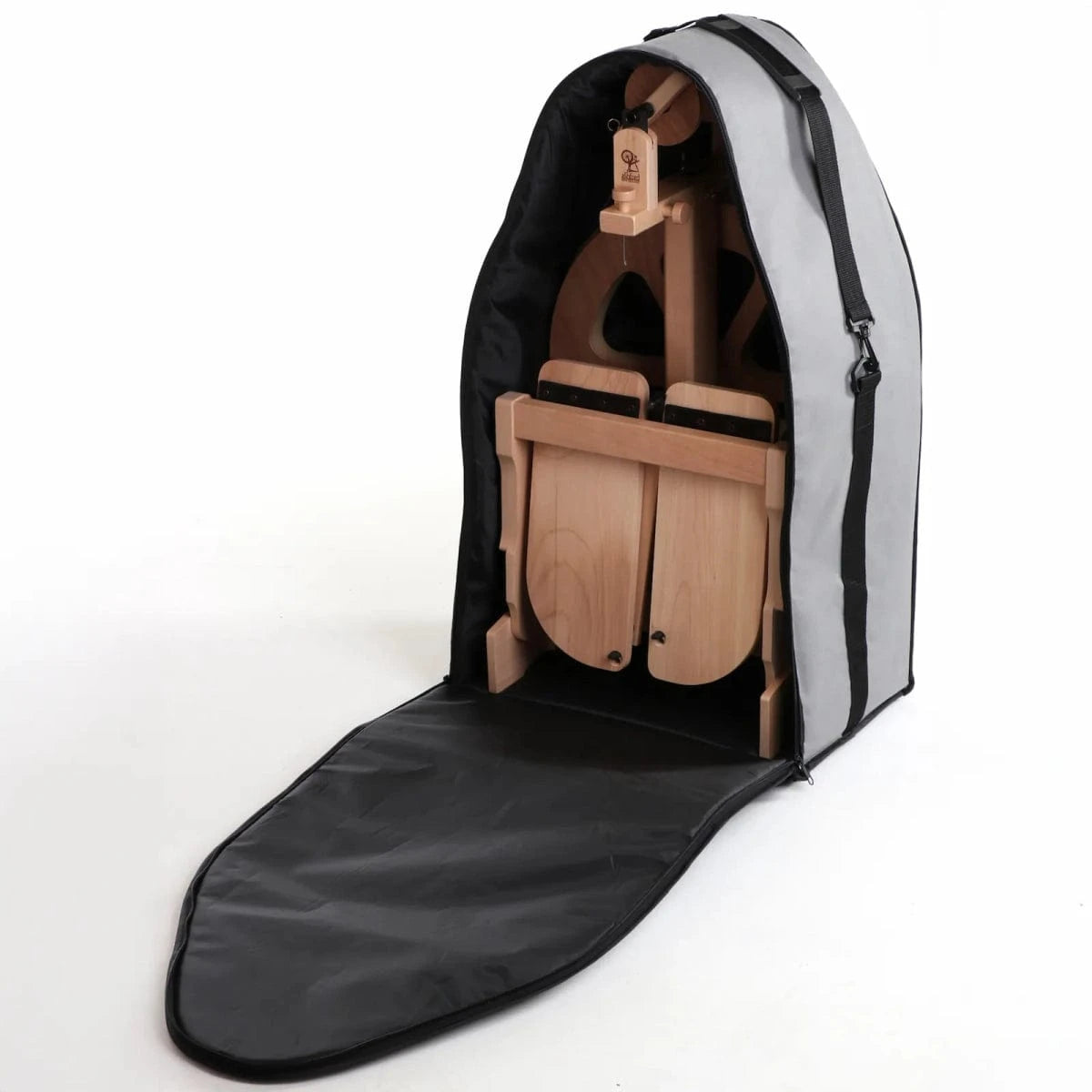
The Ashford Kiwi 3 is the wheel we start most new spinners on. It's a double treadle with scotch tension, so one knob sets your take-up and you can start and stop without reaching for the wheel. The treadles fold flat, and at 12 lb it goes to a guild meeting in one trip.
Natural or lacquered?
- Lacquered arrives sealed. Build it and spin.
- Natural is the same wheel in raw beech, for you to finish with wax, oil or stain. Finish the parts before you assemble, and leave the drive wheel groove, the whorl grooves and the bobbin ends bare so the bands keep their grip.
- Either one comes with or without the fitted Kiwi 3 Carry Bag, padded and cut for the folded frame.
What's in the box
- The wheel, flat-packed, with the hex wrench to build it. Plan on an evening, about two hours if it's your first wheel.
- Three 90mm sliding-hook bobbins, 130g (4 to 5 oz) each
- Built-in two-post lazy kate, so two full bobbins and the empty third make your first two-ply
- Wooden threading hook and Ashford's Learn to Spin booklet
Specifications
| Drive | Single drive, scotch tension |
| Treadle | Double, folding |
| Ratios | 5.5, 7.5 and 9.5:1 |
| Orifice | 10mm (3/8 In) |
| Orifice height | 69cm (27 1/4 In) |
| Drive wheel | 45cm (17 1/2 In), timber-veneered MDF on sealed ball bearings |
| Size | 73cm (28 3/4 In) tall, 50cm (19 3/4 In) deep |
| Weight | 5.5kg (12 lb) |
| Frame | Beech |
Spare bobbins and upgrade flyers
The Kiwi 3 ships with a 3-speed sliding hook flyer and three 90mm Sliding Hook Flyer Bobbins [SHFB]. Spares are the same single drive bobbin.
- The Kiwi Super Flyer Kit [KSF] has a 27mm orifice for art yarn and bulk plying. It takes Kiwi Super Flyer Bobbins [KSFB], 500g each.
- The Kiwi High Speed Adapter Kit [KHSK] adds 7.5, 10 and 15:1 for fine and lace yarn. It's a faster pulley and a drive band, so your bobbins stay the same.
Add as you go
- Ashford Spinning Wheel Oil for the flyer bearings
Why buy your Ashford wheel from Paradise Fibers
- Ships free in the contiguous United States
- 30 day returns on unused products
- Service and repair in-house at our Spokane, Washington shop, with a dedicated wheel-repair tech
- Try it in our shop. Call ahead and we'll have it set up.



Why Paradise Fibers?
Your trusted partner in creativity since 1997. Family-owned, expert-driven, and dedicated to fueling your passion.
Real "Fiberers" on Staff
Family-owned and staffed by passionate experts offering real advice to support your creative journey.
A World of Fiber
Over 20,000 in-stock yarns, fibers, and tools, shipped quickly to keep your inspiration flowing.
Trusted by the Flock
Serving over 250,000 happy customers with a 4.9-star rating based on 10,000+ verified reviews.
Frequently Asked Questions
Most in-stock orders ship within one business day from our Spokane, WA shop, and you'll get tracking as soon as yours is on the way. If an item is a special order or backordered, it says so right above the Add to Cart button.
Many of our products are beginner-friendly, and we make this clear in the product description.
You can also explore our kits and bundles, they include everything you need to get started with confidence.
Each fiber has its own feel and function. Merino is super soft and great for next-to-skin wear. BFL (Bluefaced Leicester) is strong, with a lovely luster. Need help deciding? Reach out! We’re happy to help.
For Yarn, check your pattern's yardage requirements. A standard pair of socks usually takes 100g of fingering weight, while a hat takes about 100g of worsted.For Spinning Fiber, a standard 4oz braid will generally make a pair of socks or a hat. For larger garments like sweaters, you will likely need 1.5 to 2 lbs of fiber.Still unsure? Send us your project details! We are happy to do the math for you to ensure you don't run short.
If a product goes out of stock after you order, we’ll notify you right away with options: a refund, a substitution, or a backorder (when possible). We never leave you hanging.
Returns are accepted within 30 days of delivery on unused items in their original packaging. Start a return in our returns portal with your email or order number and it issues the label. Used and demo equipment, bargain bin and clearance items, gift cards, digital patterns and custom items are final sale. If an item arrives damaged, defective or incorrect, report it in the portal with a photo and we cover the return shipping. Full terms: return policy.
Yes! Our project kits and beginner bundles include hand-picked materials, tools, and instructions — so you can dive in without the guesswork.