

Dyed Tussah Silk Top - Cyclamen
Dyed Tussah Silk Top - Cyclamen
SKU: SKU: PFTS-CYCL
🧶 We'll wind your yarn into neat cakes for easy knitting/crocheting!

Order in --:--:-- for same-day shipping
Ships today from our Spokane, WA warehouse if you order by 1:00 PM PT
Couldn't load pickup availability
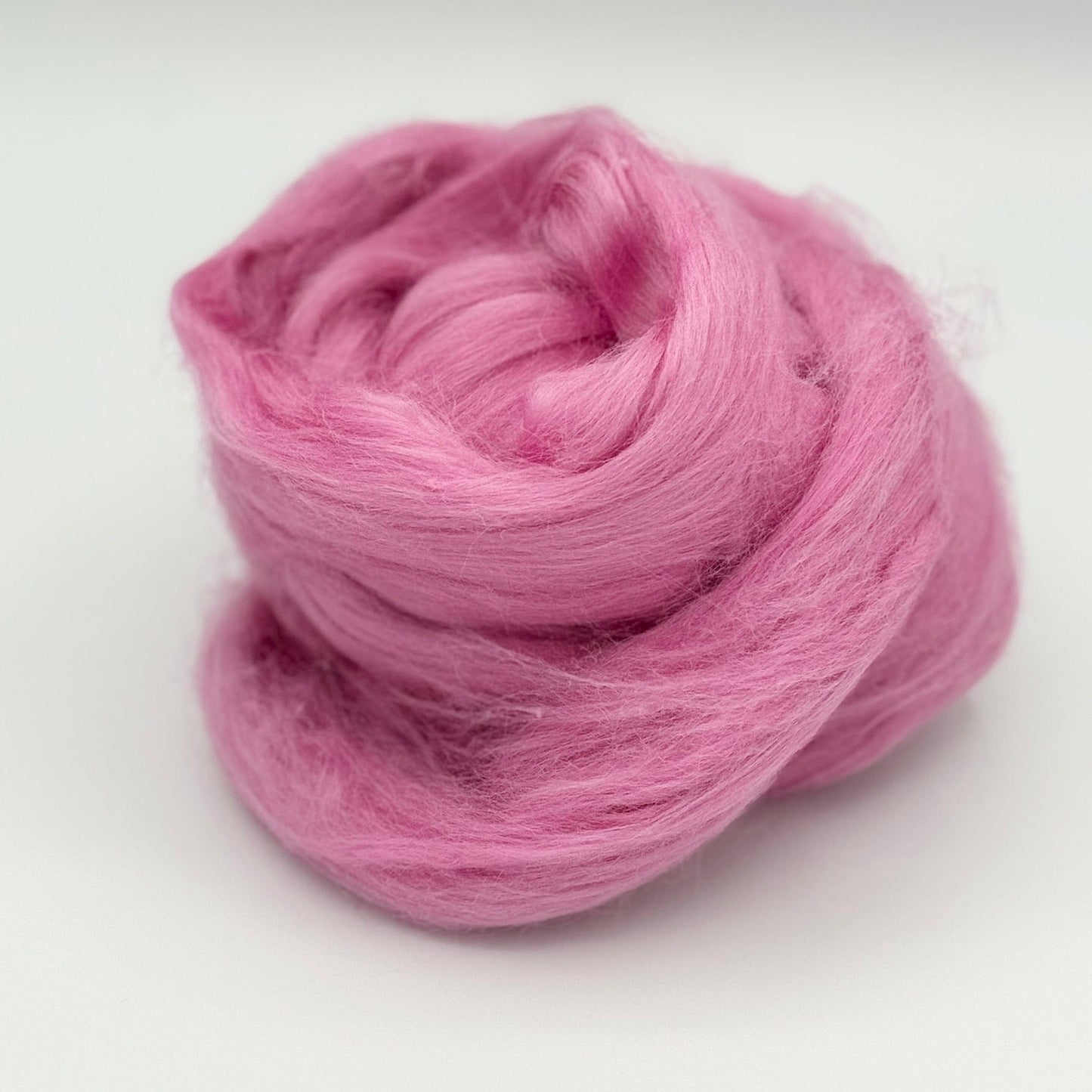
Dyed Tussah Silk Top in Cyclamen is 100% tussah silk, combed into a ready-to-spin top and dyed a bright, clear cyclamen pink. Tussah is a "wild" silk: it comes from silkworms that feed on oak and other wild leaves rather than cultivated mulberry, which gives it a warm, honeyed undertone, a slightly textured hand and a softer, more natural luster than mulberry silk.
With a long staple of 4 to 6 inches, tussah is one of the easiest silks to spin, and it is just as good for blending, carding and felting. It is dyed with commercial acid dyes that conform to the OEKO-TEX Standard 100 quality system.
Fiber details
- Fiber content: 100% tussah silk
- Color: Bright, clear cyclamen pink
- Staple length: 4 to 6 inches
- Preparation: Combed top
- Dyes: Commercial acid dyes, OEKO-TEX Standard 100 compliant
- Sold by: The ounce
How to use it
Spin it on its own from the fold or with a short forward draw for a strong, lustrous lace or fingering yarn. Card small amounts into wool on a drum carder or blending board to add color flecks and shine. Lay wisps on the surface of wet or nuno felting for a silky finish.
For a different shade, see Caipirinha (lime green) or the full range of solid colored silk. Browse all silk and silk blends and blending fibers.
Questions about Tussah Silk Top
What is the difference between tussah and mulberry silk?
Mulberry silk comes from cultivated silkworms fed only mulberry leaves; it is bright white and very lustrous. Tussah comes from wild silkworms that eat oak and other leaves, so it is naturally honey colored, a little more textured and has a softer glow. Tussah is usually easier for new silk spinners.
Is tussah silk hard to spin?
Not with a little practice. Its long staple means you can spin it very fine with little twist. Keep your hands farther apart than you would for wool and let the long fibers slide.
Can I use it for felting?
Yes. Silk will not felt on its own, but it bonds to wool during wet felting and nuno felting and adds a lovely sheen to the surface.
How much do I need?
As an accent or blending fiber, 1 to 2 oz goes a long way. To spin it on its own, plan on about 4 oz for a hat or shawlette and 8 oz for a larger shawl.
How is it priced?
Sold by the ounce. Quantity pricing applies automatically at 4 oz, 8 oz, 1 lb, 2 lb and 5 lb, so buying for a sweater costs far less per ounce than buying a single sample.

Why Paradise Fibers?
Your trusted partner in creativity since 1997. Family-owned, expert-driven, and dedicated to fueling your passion.
Real "Fiberers" on Staff
Family-owned and staffed by passionate experts offering real advice to support your creative journey.
A World of Fiber
Over 20,000 in-stock yarns, fibers, and tools, shipped quickly to keep your inspiration flowing.
Trusted by the Flock
Serving over 250,000 happy customers with a 4.9-star rating based on 10,000+ verified reviews.
Frequently Asked Questions
Most in-stock orders ship within one business day from our Spokane, WA shop, and you'll get tracking as soon as yours is on the way. If an item is a special order or backordered, it says so right above the Add to Cart button.
Many of our products are beginner-friendly, and we make this clear in the product description.
You can also explore our kits and bundles, they include everything you need to get started with confidence.
Each fiber has its own feel and function. Merino is super soft and great for next-to-skin wear. BFL (Bluefaced Leicester) is strong, with a lovely luster. Need help deciding? Reach out! We’re happy to help.
For Yarn, check your pattern's yardage requirements. A standard pair of socks usually takes 100g of fingering weight, while a hat takes about 100g of worsted.For Spinning Fiber, a standard 4oz braid will generally make a pair of socks or a hat. For larger garments like sweaters, you will likely need 1.5 to 2 lbs of fiber.Still unsure? Send us your project details! We are happy to do the math for you to ensure you don't run short.
If a product goes out of stock after you order, we’ll notify you right away with options: a refund, a substitution, or a backorder (when possible). We never leave you hanging.
Returns are accepted within 30 days of delivery on unused items in their original packaging. Start a return in our returns portal with your email or order number and it issues the label. Used and demo equipment, bargain bin and clearance items, gift cards, digital patterns and custom items are final sale. If an item arrives damaged, defective or incorrect, report it in the portal with a photo and we cover the return shipping. Full terms: return policy.
Yes! Our project kits and beginner bundles include hand-picked materials, tools, and instructions — so you can dive in without the guesswork.