


Ashford Traveller 3 Spinning Wheel
Ashford Traveller 3 Spinning Wheel
SKU: SKU: TSW3
🧶 We'll wind your yarn into neat cakes for easy knitting/crocheting!

Ships in 1-2 business days
Couldn't load pickup availability
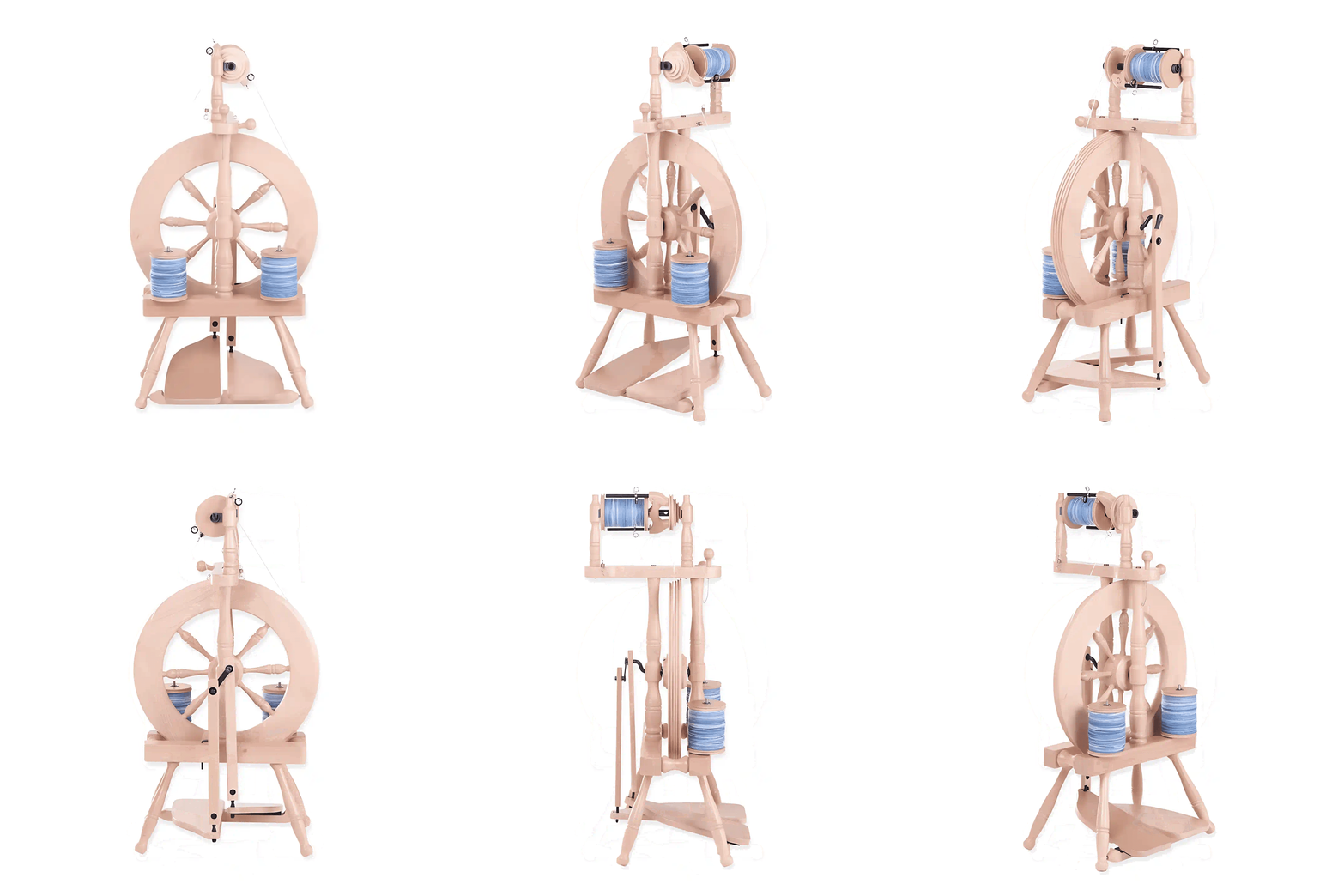
The Ashford Traveller 3 is an upright castle spinning wheel. Single drive, scotch tension, four ratios, double treadle, with the flyer centered high above a compact four-leg base. It is a compact home wheel rather than a travel one, with a one-piece frame, no folding, and 5.8kg (12¾ lb) to carry.
Specs, and what each is for
- Single drive, scotch tension. One knob sets your take-up, and you dial it in as you spin rather than hunting for a narrow band of correct tension. It is an easy system to get started on.
- Ratios 5, 7, 9 and 14:1. Flyer turns per treadle stroke, which is twist. The low end buys you drafting time. 14:1 is for fine and lace.
- Orifice 10mm (⅜ in). This is the ceiling on how thick a yarn can pass through. For thick singles and art yarn, the jumbo flyer lifts it.
- Orifice height 80.5cm (31¾ in). This is how high your hands work, and it is the main ergonomic spec on a wheel. The orifice and flyer land at a comfortable height from a low-set chair. Before you buy, sit in the chair you would actually spin in and notice where your hands rest. That is the height the wheel has to meet. Almost nobody publishes this figure.
- Drive wheel 46cm (18 in), heavy rim. Rim mass carries the wheel between strokes, so your feet do less. Ashford rate it 20% up on the previous generation.
- Sliding-hook flyer, centered. Stainless squeeze-and-slide guides move anywhere along graphite-fiberglass arms, so bobbins fill evenly, and the orifice carries a smooth insert so the yarn runs free instead of catching. It reads the same left- or right-handed.
- Polycord drive band. Cut to length at the factory, and the wheel and flyer grip it correctly as supplied. To change ratio you move the band on both the drive wheel and the flyer whorl. That is what gives you the stated ratios and keeps it consistent as you spin. If tension ever feels off, call us. A band a few years old is usually just due for replacement.
- Bearings. Sealed ball bearings carry the drive wheel and the conrod where it passes through the base. The flyer front and rear bearings are the ones that want a drop of oil, more often than anything else on the wheel, and the bobbin rod and conrod bearings take one occasionally.
- Solid New Zealand silver beech. The base, uprights and treadles are solid beech. The drive wheel and bobbins are not, which matters when you finish a natural wheel.
What comes in the box
The wheel flat-packed, three 90mm sliding-hook bobbins at 130g (4 to 5 oz) each, which is about a standard braid of fiber apiece, and a wooden threading hook with its own slot on the wheel. Ashford include a simple Learn to Spin booklet to get you started if you have never spun before. If you are starting from scratch, pick a forgiving fiber to learn on. A Corriedale or a Shetland drafts easily and will not fight you.
It goes together straightforwardly. If this is your first wheel, give it about two hours. If you have built a wheel before, or you are quick with flat-pack furniture, expect somewhere between half an hour and an hour.
The wheel has an integrated two-post lazy kate in the base, on the side you sit to spin. That is the rack that holds your full bobbins while you ply them together. The posts stand straight up, and the sharp angle the yarn takes coming off a vertical bobbin is what supplies the light drag plying wants, so there is nothing to adjust and nothing extra to buy. It takes Ashford's Jumbo bobbins as well as the standard ones, which most built-in kates will not. Two posts and three included bobbins is exactly a first two-ply. Two of singles on the kate, and the third empty on the flyer to wind onto.
Ashford Spinning Wheel Oil is not in the box and you will want it from the first session.
Natural or lacquered?
Same wheel either way. The difference is who does the finishing. Lacquered arrives sealed from the factory, so you assemble it and spin. Natural arrives as raw silver beech with sandpaper included, to sand smooth and seal yourself.
Finish the parts before assembly while they are still flat, and leave three things bare. The groove around the drive wheel, the whorl grooves, and the bobbin whorl ends. The grippy exposed interior in those grooves is what holds the brake band and keeps the drive cord running consistently, and a coat of finish is what makes a band slip.
Which spare bobbin fits it?
The one to order is the Sliding Hook Flyer Bobbin, single drive, 90mm. Pick the single-drive option. The double-drive version of the same bobbin belongs to a different flyer.
We would not point you at the ordinary Ashford Standard Bobbin for this wheel. It holds noticeably less, and you have to run the large whorl with the brake band to get enough tension out of it. If you already have Standard bobbins from another Ashford they will serve for plying, but the 90mm sliding-hook bobbin is the one to buy.
Add to your setup
- Sliding Hook Flyer Bobbins, single drive, so you keep spinning instead of stopping to wind off.
- Basic Jumbo Flyer Kit, which lifts the 10mm orifice ceiling for chunky singles and art yarn, on jumbo bobbins the built-in kate takes.
- Traveller 3 drive band, cut to this model's length. Bands are not interchangeable between wheels.
- Ashford Finishing Wax for sealing the natural version, and what we reach for on the shop floor.
- Ships free in the contiguous United States
- 30 day returns on unused products
- Service and repair in-house at our Spokane Washington shop, the only Ashford dealer in the country with a dedicated wheel-repair tech
- Try it in our shop, call ahead so we can have it ready



Why Paradise Fibers?
Your trusted partner in creativity since 1997. Family-owned, expert-driven, and dedicated to fueling your passion.
Real "Fiberers" on Staff
Family-owned and staffed by passionate experts offering real advice to support your creative journey.
A World of Fiber
Over 20,000 in-stock yarns, fibers, and tools, shipped quickly to keep your inspiration flowing.
Trusted by the Flock
Serving over 250,000 happy customers with a 4.9-star rating based on 10,000+ verified reviews.
Frequently Asked Questions
Most in-stock orders ship within one business day from our Spokane, WA shop, and you'll get tracking as soon as yours is on the way. If an item is a special order or backordered, it says so right above the Add to Cart button.
Many of our products are beginner-friendly, and we make this clear in the product description.
You can also explore our kits and bundles, they include everything you need to get started with confidence.
Each fiber has its own feel and function. Merino is super soft and great for next-to-skin wear. BFL (Bluefaced Leicester) is strong, with a lovely luster. Need help deciding? Reach out! We’re happy to help.
For Yarn, check your pattern's yardage requirements. A standard pair of socks usually takes 100g of fingering weight, while a hat takes about 100g of worsted.For Spinning Fiber, a standard 4oz braid will generally make a pair of socks or a hat. For larger garments like sweaters, you will likely need 1.5 to 2 lbs of fiber.Still unsure? Send us your project details! We are happy to do the math for you to ensure you don't run short.
If a product goes out of stock after you order, we’ll notify you right away with options: a refund, a substitution, or a backorder (when possible). We never leave you hanging.
We offer 30-day easy returns on most unused products. If something arrives damaged or missing, we’ll make it right. Just contact our support team.
Yes! Our project kits and beginner bundles include hand-picked materials, tools, and instructions — so you can dive in without the guesswork.